
 Tilt Shift Calculator
 POWERING THE EOS R5
 R5 Portal
 Camera
 Lens
Lens Batteries
 Memory Cards
Canon EOS R5
Crowdsourced Review; Manual Supplement; Known Issues; Hacks; Insights; User Forum

Known Issues
Hacks
Inquiries

Panasonic S1R CFexpress Upgrade Gives Only 1/7th Boost
Upgrading the S1R cameras to use CFexpress cards improves card intake speeds by about 1/7th. Its, frankly, a little disappointing, but not surprising. When Panasonic allowed for the use of CFexpress cards in its flagship cameras via a firmware update, many had visions of multiplying data throughput – which indeed is theoretically possible when looking at the CFexpress standard. But there are many, many variables that affect actual throughput, including the camera’s firmware and the hardware and software built-in to components of the bodies that usher the data onto the card. There are so many variables, that after talking to engineers and executives at several CFexpress manufacturers, we stopped keeping track of them and opted instead to just acquire and test the cards to show real-world performance.
The Panasonic S1R and its husky brother, the video-oriented S1H, are limited to just below 10 frames per second in terms of image acquisition, and that won’t change with a faster card, but what will change is the behavior of the camera once the cache is filled up. The cameras start a significant slowdown of framerate after six seconds into a burst. The excellent camera site Imaging-resource.com provides some independent testing of these sorts of things, as we corroborated their findings both with a recent rental, as well the author of this research piece having used the S1R as his primary shooter for most of 2019. With those 62 shots taken before the cache fills, the cameras take about 17 1/2 seconds to finish packing the data stored in the cache onto an XQD card. With upgraded firmware and the addition of any of the fastest CFexpress cards available, that time to pack the data away lowers to 13 1/2 seconds.
In the days of XQD cards, trying to continue to shoot with a full buffer would only offer a photographer 2.5 frames per second. With the CFexpress card enabled, that buffered shooting rate now becomes 2.8 frames per second.

It appears that there are hardware and/or software limitations still in the Panasonic data path separate from the speed of the cards. The cards have been extensively tested with the Canon EOS R5 and R6 to show greater absolute capability, as the link above and chart below show. The five fastest-rated cards tested all took more than 300 shots in a 30-second period on the Canon R5, and showed a framerate with a full cache of 9.9 frames per second (versus the 20 frames per second the camera was set to do in electronic shutter mode during that test).

That 9.9 frames per second (FPS) moving onto the CFexpress card in the R5 compares directly with the 2.8 frames per second moving onto the same card in the Panasonic S1R, a more than three-fold difference. Below is a chart of available CFexpress cards showing how many seconds each takes to clear the R5 buffer, which is a similar size to that of the Panasonic S1R. For one of the fast cards, the average is about 4 seconds, compared to the S1R’s CFexpress buffer clearing of 17.3 seconds using XQD and 13.5 seconds using CFexpress.

We have seen this card format software dance before. When the UHS-II standard became available, a few cameras received upgrades to firmware allowing the new cards’ use. In no case did those upgraded cameras fully exploit the new speeds available with the new card standard, as some combination of other components provided data bottlenecks.
Which Card is Best?
The ProGrade Cobalt cards appear to show the best performance and decent price, but the differences in performance on the Panasonic bodies are very slight versus the differences seen on the Canon (and even Nikon) bodies, where there appear to be fewer bottlenecks. Within the margin of error at the top are also the Angelbird Pro XT card and the Delkin Power card. Sony’s Tough card performs just as well, but is more expensive. Transcend and the ProGrade Gold cards performed measurably, but slightly less well.

Canon’s LP-E6NH Battery Performance: Meh
[Update: This article has been superseded by a more comprehensive review of batteries and other power options for the R5 and R6 cameras that can be seen here.]
There’s nothing wrong with Canon’s most recent battery model’s capacity. There’s not much better about it either. Camnostic tested 18 of the brand new LP-E6NH, and an equal number of older batteries (LP-E6 and LP-E6N) over five months and about 150 full draw-downs and recharges. The upshot: you’re getting about the same juice after the “honeymoon” early period in a new LP-E6NH battery’s life as you do with one of the LP-E6 batteries you bought back a decade ago.
On paper, the batteries have gained capacity, from 1800 milliamp hours (mAh) for the batteries first introduced in 2008 with the Canon 5D Mark II, on to 2130 mAh for the new LP-E6NH batteries introduced in July with the R5 and R6 cameras. That’s a theoretical boost of about 15 percent.
As a practical matter, though, this difference goes away as roughly a dozen recharge cycles will bring this new battery’s chemistry to a capacity closer to 1930 mAh, or only about 5 percent better than the original battery. Interestingly, the oldest batteries appear to hold up much better, causing their comparative capacities to remain roughly equal after the equivalent of a few years’ use.
Here is a graph of performance decay over the first dozen or so recharge cycles for a number of LP-E6NH batteries, compared to some older batteries measured after 5-10 years’ use. The blue columns toward the end are the average of four LP-E6 batteries, and the orange columns are the average of eight LP-E6N batteries. The height of the columns indicate the milliamp hours (mAh) capacity as measured by using a specialized Dolgin battery tester designed for Canon LP-E6 batteries.

In the chart below, you see the variation of individual LP-E6NH batteries decaying over up to 14 recharge cycles. As can be seen with the gray columns above, the average appears to decay significantly for the first seven or eight recharges, and then plateau at around 1.93 mAh. It may well be that after a decade of use, the batteries would be performing very much like the old LP-E6 batteries shown above in the blue columns.

Battery chemistry determines many factors, such as recharge speed, capacity and capacity decay over time. With many innovations developed in the last decade, Canon’s batteries have not significantly changed, it appears, in any of these measures. The major changes apparent in battery design appear to be the addition of chips in the LP-E6N and LP-E6NH batteries that allow for recording of battery performance, validation of them being manufactured by Canon, and a rough calculation of recharge performance.

Canon R5 Sensor Gets 95 DXOMark Rating
DXOMark rated the Canon R5’s sensor among the best it’s ever tested, besting the likes of the Panasonic S1R, but behind the better of the Sony high-end sensors. Adding all of the other features packed into the camera, DXOMark – often seen as more critical of Canon bodies – stated it “looks set to be the one to beat.”
Canon Revs Firmwares
Showing a much faster cadence of firmware updating, as promised, Canon is out with version 1.2 for its R5 and R6 bodies, as well as updates for the others in the R series; a lens firmware update for the RF 50mm F/1.2; and a revision for its 1D X Mark III DSLR.
Canon notes that the version 1.2 for the R5 and R6 adds an auto dim feature for screen brightness; enables 2nd curtain shooting sync with wireless flash; updates the HEIF format used for greater compatibility; and adds autofocus capabilities while zooming for some lenses.
More importantly, there are a list of firmware-addressable issues R5 and R6 users have been hoping would be fixed. Among them, the intervalometer bug, which Canon quietly addressed in this 1.2 release. Canon’s internal intervalometer on the R5 and R6 would not function past the first shot if back button focus options were selected. Now it does. The other issues appear yet unaddressed.
Since launch, the R5 cameras very occasionally hang, a bug that has thwarted all attempts at correlating a feature or use to the bug. With each firmware release, it is hoped the bug will disappear, but it takes some days or weeks to show that the rare behavior is still lurking. A few days after the 1.2 firmware release, at least one user reported a hang consistent with this bug in a firmware-updated body.
The R and the RP bodies were revved to 1.8 and 1.6 respectively. Both updates included the same additions: improved color balance with the new RF 50mm f/1.8 and support for the RF 70-200 f/2.8 and the RF 100-500.
The oddest of the lot is the version 1.05 of the firmware for the RF 50mm f/1.2, which claims to improve image noise performance. Because that’s physically impossible, we think that is a translation error, and it is referring to the audible noise of the lens.
Canon does still make a DSLR, and even they get a few precious hours of software engineer development time. Version 1.3 gives the mirror slapper the same new bits as given to the R5 and R6, and also fixes an FTP transfer hang bug.

CANON 400MM DO II FIRMWARE UPDATE HELPS CALM R5
A recent update to the firmware for the Canon 400mm f/4 DO IS II appears to have fixed a problem reported by some users where the lens stabilization would jerk the viewfinder image at times. The firmware notes had included a bit indicating that it “Fixes a phenomenon, in rare cases, the IS mechanism may cause the image to jump.”
At least one forum dweller on Fred Miranda indicated that it appears to have fixed the problem so far.
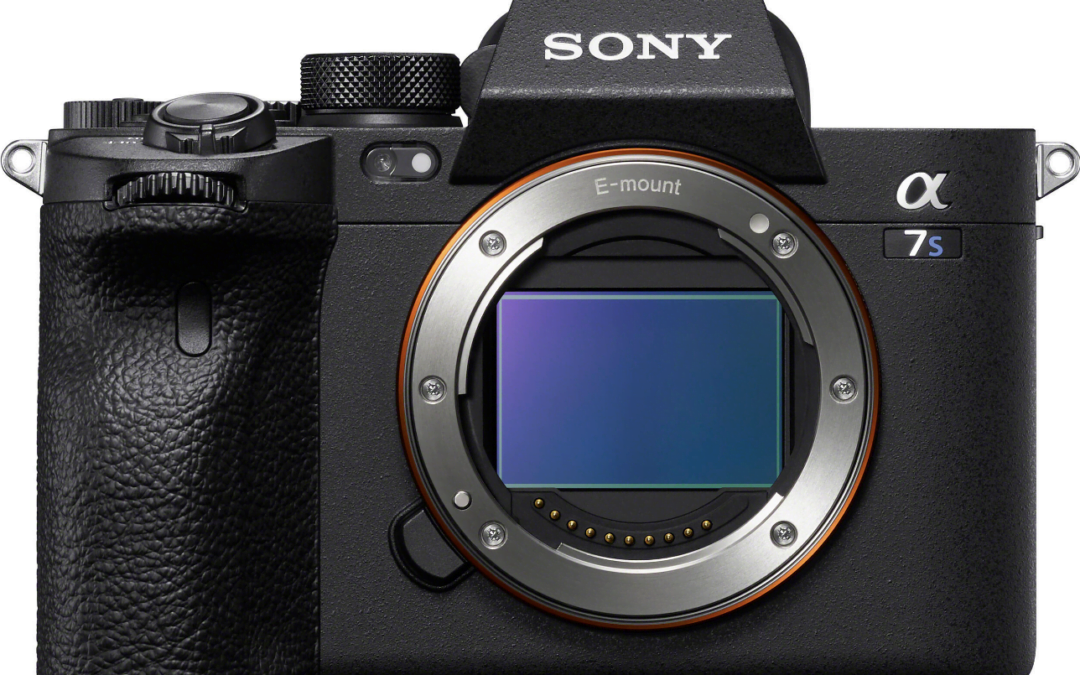
Sony A9x Answer to R5 Expected January
Rumors solidified about a “real” Sony A9 upgrade coming in January that will include 8K video resolution capabilities. That implies a sensor resolution of at least 45 megapixels. It would double the throughput from the current A9 Mark II, the pro level body upgrade from last year that failed to improve its sensor and most other specs.
The would-be Mark III would have flagship specs very similar to that of the July-released Canon EOS R5. It will likely use a similar form factor, as the A9 Mark II sports a more “human,” rounded shape in a non-gripped form factor. Rumors suggest a roughly $5,000 price, an increase from previous models and a level higher than the Canon’s highest-end mirrorless camera.
Camera forum dwellers speculated about an A9 upgrade coming, with an Olympics scheduled in Japan. Both Canon and Sony tend to release new flagship models prior to summer Olympic events.
The R5 has left relatively little to be improved for a 1-series mirrorless launch, aside from the gripped form factor. The R5 has two grip options, one including the latest in obscure networking capabilities, although that grip does cause some frames-per-second limitations in some instances. Another potential area of improvement could be a thermal design that allowed for longer high-bitrate video recording. Pros and amateurs alike would welcome battery performance improvements as well.
A new Sony offering could be more significantly improved in key specs, such as resolution, video capabilities, upgrading the A9 Mark II’s older menu interface, and interface and performance improvements with flash triggering.